When Your Autopilot Thinks It’s Had One Too Many Rums
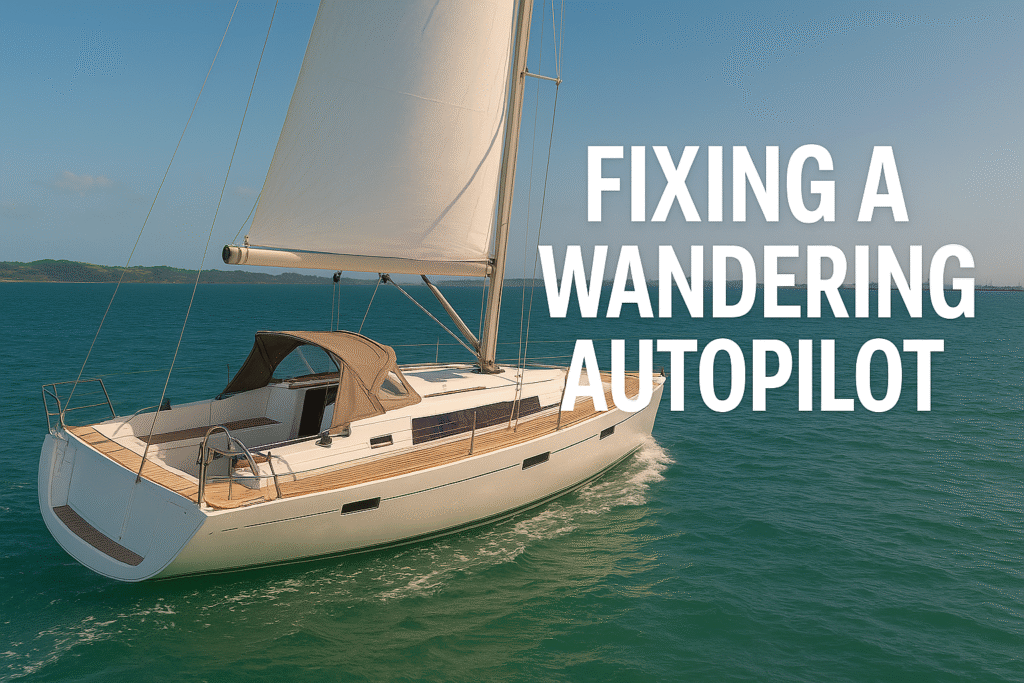
Picture this: you’re running downwind on a Beneteau Oceanis 45, sails nicely set, kettle just boiling — and the autopilot suddenly decides it’s going sightseeing. Instead of keeping her nose straight toward Tauranga, the boat wanders about like a distracted Labrador on the beach. Not ideal.
That was exactly the issue we faced on a recent Auckland to Tauranga delivery. The yacht’s Raymarine autopilot simply couldn’t hold a course downwind. Fine in flat water, but once the breeze picked up and the seas followed, she zig-zagged like she was drawing crop circles in the Hauraki Gulf.
Pre-Departure Checks: When Gremlins Hide in the Compass
Before we left Auckland, we gave the Beneteau a thorough once-over. Rig tension, sails, fluids, safety gear — the works. The main culprit quickly revealed itself: the autopilot’s compass was mounted just a little too close to a bundle of electrical wiring.
Every time the fridge kicked in, the compass thought north had shifted. According to Raymarine’s installation guide, even small amounts of magnetic interference can completely confuse a fluxgate compass.
Lesson learned? Always check compass placement. Tools, speakers, and wiring looms can all throw it off.

The Fix: New Pump, New Ram, Fresh Attitude
There’s nothing like sailing offshore knowing your autopilot is trustworthy. We swapped out the old, tired hydraulic pump and ram for a shiny new hydraulic drive unit that meshed perfectly with the existing Raymarine backbone. The new system had faster response times, more grunt, and far less noise.
Once we relocated the compass to a quieter, interference-free spot, the difference was night and day. On the next sea trial, the boat held course like she was on rails, even running wing-on-wing downwind with a sloppy quartering sea.
Crew Dynamics: Autopilot = The Fourth Hand
An autopilot isn’t just a gadget — it’s a crewmember. Without it, passages become long, tiring watches where helmsmen burn out quickly. With it, the crew can cook, navigate, or even enjoy a hot cuppa without the boat wandering 20° off course.
On this trip, the crew joked that the new hydraulic ram was the “strong, silent type” we’d always wanted on board. No complaints, no wandering, just quietly keeping us on track.
Navigation & Weather Considerations
The Auckland to Tauranga run is a familiar one, but the Bay of Plenty coastline demands respect. With the forecast showing building westerlies, we needed the autopilot at peak performance.
A wandering helm downwind in quartering seas isn’t just annoying — it can lead to accidental gybes and gear damage. With the new system, the Oceanis 45 tracked beautifully, surfing down waves with just the right amount of rudder correction.
For this passage, we leaned heavily on MetService Marine forecasts — a must-have for any NZ coastal trip.
Safety at Sea: Steering is Everything
We like to say: “Lose the stove, you’ll be hungry. Lose the sails, you’ll be slow. Lose the helm, you’re in real trouble.”
Reliable steering is at the very heart of safety. By upgrading the pump and ram, and moving that misbehaving compass, we made sure the crew had redundancy and confidence.
Vessel Review: Beneteau Oceanis 45 with a Fresh Autopilot
The Oceanis 45 is a comfortable, forgiving cruiser. She’s roomy below, sails easily, and handles NZ coastal chop better than many of her contemporaries. With the old autopilot setup, though, she was a handful off the wind.
After the fix? A dream to sail. The helm felt balanced, the autopilot responsive, and she covered the Auckland–Tauranga stretch with ease.

Conclusion: Why Autopilot Matters (and Why Helm Services NZ Exists)
This delivery reminded us of a simple truth: an autopilot isn’t optional, it’s essential. When it works, it’s your best mate. When it doesn’t, it can make a straightforward passage exhausting and unsafe.
At Helm Services NZ, we specialise not just in moving yachts, but in making sure they’re ready to move. From diagnosing wandering autopilots to integrating new Raymarine gear, we bring practical skipper’s know-how to every job. Whether you’re planning a coastal hop to Tauranga or a Tasman crossing, you’ll sail easier knowing your systems are sorted.